
What Is a 504 Plan?
A complete guide for parents, students, and educators.
If your child has a disability, learning difference, or health condition that impacts their ability to succeed in a traditional school setting, you may have heard about something called a 504 Plan. But what exactly is it? And how does it help?
In short, a 504 Plan is a customized support plan designed to ensure that students with disabilities have equal access to education—and it’s protected by federal law. It helps level the playing field, so students can learn, grow, and thrive alongside their peers without being held back by challenges outside their control.
Let’s take a deeper dive into what a 504 Plan is, how it works, who qualifies, and how to set one up.
🧾 What Is a 504 Plan?
A 504 Plan is a written plan developed by a school to give students with disabilities the support they need to access and succeed in the general education classroom. It falls under Section 504 of the Rehabilitation Act of 1973, a civil rights law that prohibits discrimination based on disability.
Unlike an IEP (Individualized Education Program), which is part of special education law (IDEA), a 504 Plan is for students who don’t necessarily need specialized instruction but still require accommodations to participate fully in school.
✅ Key Features:
- Tailored accommodations and supports
- No change to the general education curriculum
- Designed to remove barriers to learning and participation
- Legally binding and enforceable
👩🏫 What Types of Accommodations Can a 504 Plan Include?
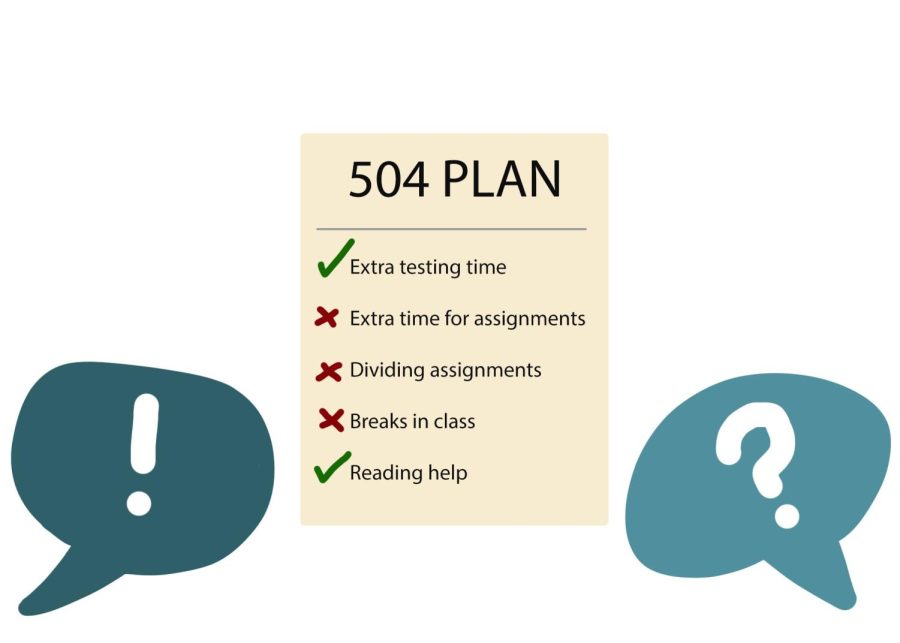
Every 504 Plan is different because it’s built around a child’s specific needs. Accommodations might address physical, emotional, medical, or learning challenges. Some common examples include:
📚 Academic Supports:
- Extra time on tests or assignments
- Modified homework load
- Preferential seating near the teacher
- Use of assistive technology (speech-to-text, calculators)
🏥 Health & Medical Accommodations:
- Permission to carry and administer medication
- Access to the nurse as needed
- Flexible bathroom breaks
- Diabetes or asthma care plans
🧠 Behavioral & Emotional Supports:
- Scheduled breaks to reduce anxiety
- A quiet room to calm down
- Behavior intervention plans
- Regular check-ins with a counselor or social worker
These accommodations help students overcome obstacles without altering what they are expected to learn—just how they access and show mastery of the material.
🧠 Who Qualifies for a 504 Plan?
Eligibility is based on the legal definition of a disability under Section 504:
“A physical or mental impairment that substantially limits one or more major life activities.”
That might sound broad—and it is! Some of the most common conditions covered by a 504 Plan include:
- ADHD
- Dyslexia
- Anxiety and depression
- Epilepsy
- Diabetes
- Autism Spectrum Disorder
- Hearing or vision impairments
- Physical disabilities (like cerebral palsy or mobility challenges)
- Temporary medical issues (like recovering from surgery or a serious injury)
Importantly, students don’t need to be failing or struggling academically to qualify. If a condition impacts their ability to learn or participate like their peers, they may still be eligible for accommodations.
📝 How Is a 504 Plan Created?

Getting a 504 Plan in place involves several key steps. Here’s what the process typically looks like:
1. Referral or Request
You (the parent/guardian), teacher, or school staff can request a 504 evaluation. You don’t need a formal diagnosis, but documentation from a doctor or specialist helps.
2. Evaluation
The school evaluates the student to determine if they meet the criteria under Section 504. This can include teacher reports, observations, medical records, or academic performance.
3. Eligibility Meeting
A team—usually including parents, teachers, counselors, and school administrators—reviews the evaluation results and decides if the student qualifies.
4. Plan Development
If eligible, the team creates a personalized 504 Plan outlining the specific accommodations, supports, and who is responsible for implementing them.
5. Implementation
Once finalized, the plan is shared with all relevant staff, and accommodations begin immediately.
6. Annual Review
504 Plans are reviewed at least once a year (or sooner if needed) to make sure they’re still meeting the student’s needs.
🏫 504 Plan vs. IEP: What’s the Difference?

| Feature | 504 Plan | IEP (Individualized Education Program) |
|---|---|---|
| Law | Section 504 (Rehab Act) | IDEA (Individuals with Disabilities Education Act) |
| Purpose | Equal access | Specialized instruction & services |
| Eligibility | Broad: any disability impacting learning | More specific: must fit IDEA categories |
| Services | Accommodations only | Services and accommodations |
| Plan Type | Less formal, usually 1–2 pages | Detailed, structured legal document |
| Parent Rights | Fewer procedural safeguards | Extensive rights and protections |
Students who don’t qualify for an IEP might still benefit significantly from a 504 Plan.
❓ FAQs About 504 Plans
Q: Can a 504 Plan be used in college or after high school?
Yes! While K–12 schools are required to implement 504 Plans, colleges and universities are also bound by Section 504 and the ADA. However, students must request accommodations themselves, and plans won’t automatically transfer—so students need to advocate for themselves.
Q: Can my child be disciplined if they have a 504 Plan?
Yes—but the school must consider the disability when issuing disciplinary action. If behavior is related to their disability, schools are required to adjust discipline and may need to review the 504 Plan.
Q: Do I have to pay for the evaluation?
Nope. Public schools are required to evaluate students for 504 eligibility at no cost to families.
Q: Can a school deny my child a 504 Plan?
Only if your child doesn’t meet the legal criteria. But if you disagree with the decision, you have the right to request a hearing, mediation, or appeal.
Q: Who enforces 504 Plans?
The U.S. Department of Education’s Office for Civil Rights (OCR) oversees compliance. If a school fails to follow the plan, you can file a formal complaint.
Q: Can a 504 Plan be temporary?
Yes. If your child has a short-term condition (like recovering from surgery), a 504 Plan can be written to cover a specific timeframe and removed later if no longer needed.
🧭 Tips for Parents Navigating the 504 Plan Process

- Keep everything in writing. Emails, meeting notes, doctor recommendations—having documentation helps.
- Know your rights. You have a say in the plan and how it’s implemented.
- Build a collaborative relationship with your child’s teachers and school staff.
- Review the plan every year—and speak up if it’s not working.
- Empower your child to understand their own needs and advocate as they get older.
✅ Conclusion: 504 Plans Create Opportunity, Not Advantage
A 504 Plan isn’t about giving students with disabilities an unfair edge—it’s about giving them a fair shot. These plans remove obstacles, offer flexibility, and ensure that every child has access to the education they deserve.
Whether your child has ADHD, anxiety, a chronic illness, or a physical impairment, a 504 Plan could be the support system that helps them thrive—not just survive—in the classroom. It’s backed by law, centered on equity, and built to grow with your child’s evolving needs.
If you think your child might benefit from one, don’t wait. Reach out to your school and ask about starting the evaluation process. Early action can make all the difference.