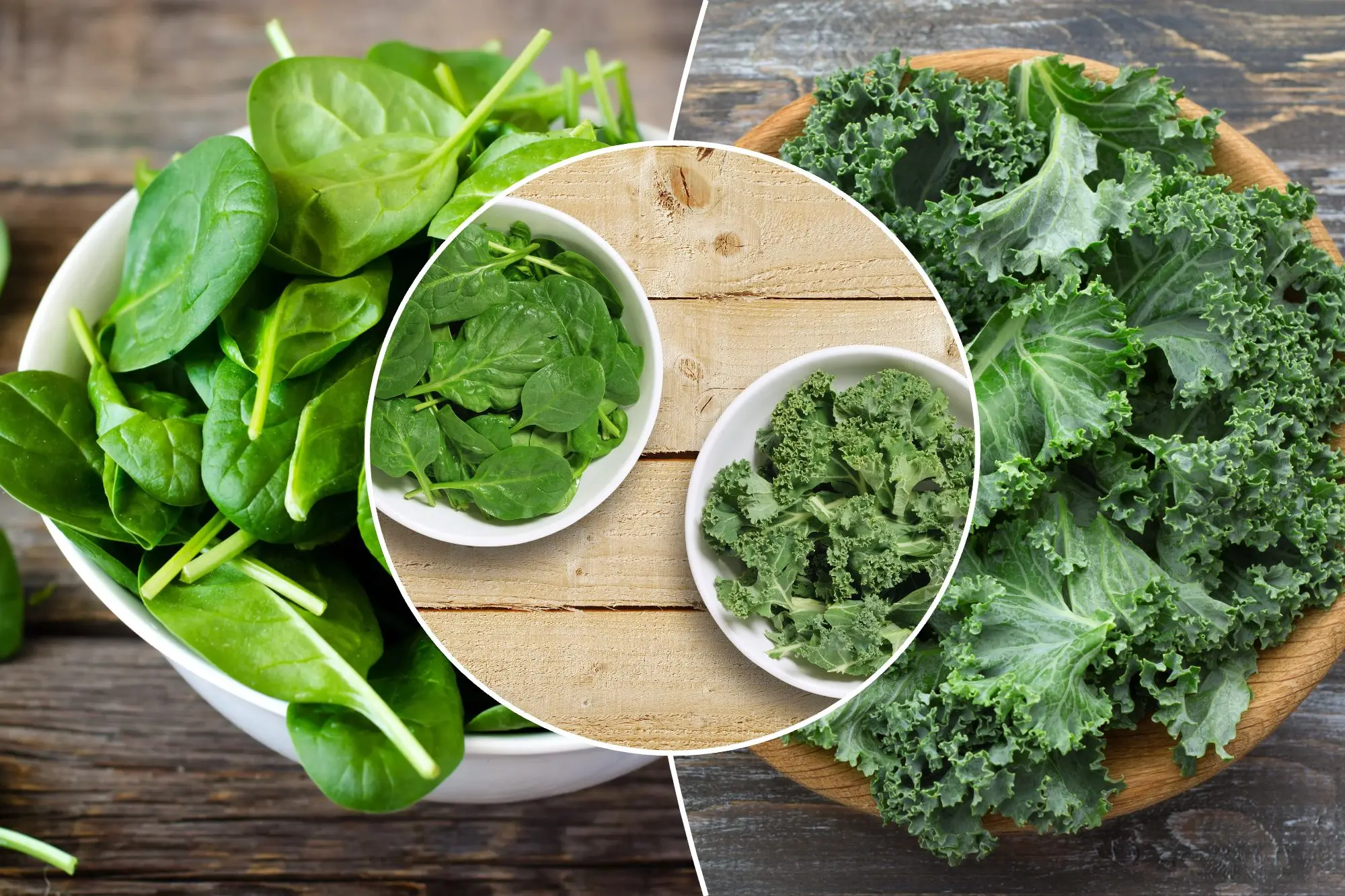
🥬 Kale vs. Spinach: Which Leafy Green Reigns Supreme in Nutrition?
If you’re trying to eat healthier or add more greens to your plate, there’s a good chance kale and spinach are already on your radar. These two leafy powerhouses are packed with nutrients and are favorites in everything from green smoothies and salads to sautés and soups.
But when it comes to nutrition, which one is better—kale or spinach? The answer isn’t as simple as you might think.
Let’s break it down side by side to see how these greens compare in terms of vitamins, minerals, health benefits, and even how they’re best used in everyday meals.
🥗 The Basics: What Are Kale and Spinach?

Before we dive into the nutrition stats, let’s get to know each green.
🌿 Kale
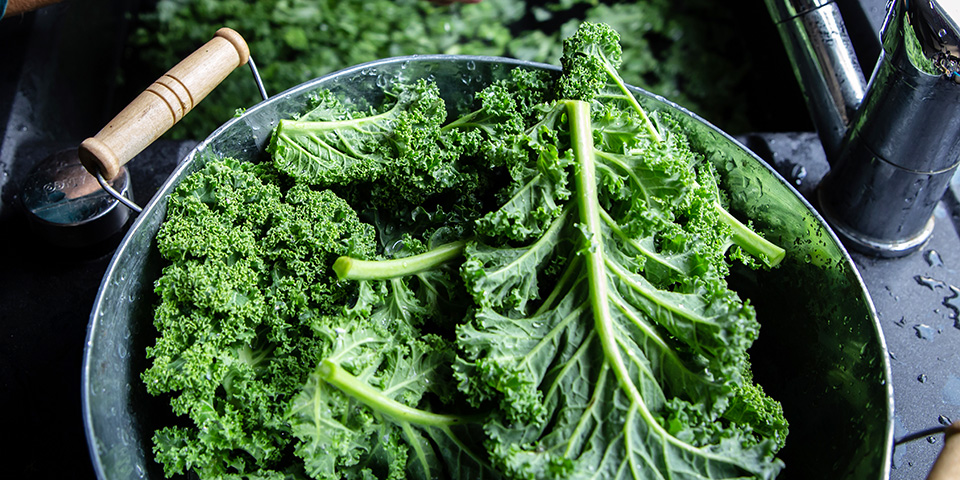
Kale is a member of the cruciferous vegetable family, which includes broccoli, cauliflower, and Brussels sprouts. It has thick, hearty leaves and a slightly bitter, earthy flavor. There are several types of kale, including curly kale (most common), lacinato or dinosaur kale (dark and bumpy), and red Russian kale.
🌱 Spinach
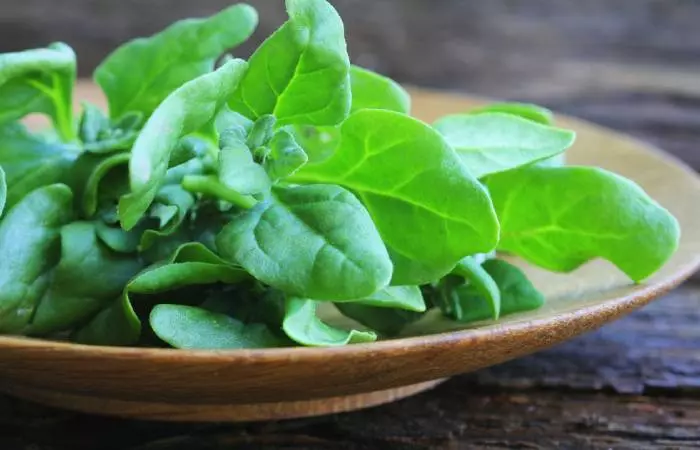
Spinach is a leafy green flowering plant that belongs to the amaranth family. Its soft, tender leaves have a mild flavor, making it a versatile choice for both raw and cooked dishes. Baby spinach is especially popular for salads and smoothies due to its delicate texture.
⚖️ Nutrition Face-Off: Kale vs. Spinach (per 1 cup, raw)
| Nutrient | Kale | Spinach |
|---|---|---|
| Calories | 33 | 7 |
| Protein | 2.9 g | 0.9 g |
| Fiber | 2.6 g | 0.7 g |
| Vitamin A | 206% DV | 56% DV |
| Vitamin C | 134% DV | 14% DV |
| Vitamin K | 684% DV | 181% DV |
| Calcium | 9% DV | 3% DV |
| Iron | 6% DV | 5% DV |
| Folate (Vitamin B9) | 5% DV | 15% DV |
| Potassium | 329 mg | 167 mg |
| Magnesium | 23.4 mg | 23.7 mg |
*DV = Daily Value
🧠 Key Takeaways From the Comparison
✅ Kale Packs a Vitamin Punch
Kale is significantly higher in vitamins A, C, and K, making it excellent for supporting immune function, eye health, and blood clotting.
✅ Spinach Wins for Folate
Spinach takes the lead in folate, a crucial nutrient for DNA synthesis and especially important for pregnant individuals.
✅ Kale Has More Fiber and Protein
Per cup, kale provides more protein and dietary fiber, which can help with satiety and digestive health.
✅ Spinach Is Lower in Calories
If you’re watching your calorie intake or trying to bulk up greens without bulking up your plate, spinach is incredibly low-cal at just 7 calories per cup.
🔬 Health Benefits: How Each Leafy Green Helps You Thrive
Both kale and spinach are nutritional powerhouses, but they each shine in slightly different areas.
🛡️ Kale Benefits
- Rich in antioxidants like quercetin and kaempferol, which help combat inflammation and protect against oxidative stress.
- High in vitamin C, which supports immune health and boosts collagen production.
- Loaded with vitamin K, which supports bone density and blood clotting.
- Contains lutein and zeaxanthin, important for eye health and reducing age-related macular degeneration.
- May help lower cholesterol due to its fiber content and bile acid sequestrants.
💚 Spinach Benefits
- Excellent source of folate, which supports heart health and is essential during pregnancy.
- Contains nitrates, which may help lower blood pressure and improve athletic performance.
- Packed with iron, though it’s non-heme (plant-based), so pairing with vitamin C (like citrus) boosts absorption.
- Also provides lutein, promoting eye health.
- High in magnesium, supporting muscle function, nerve signaling, and energy production.
🍽️ How to Eat Them: Taste, Texture, and Cooking Tips

🥬 Kale
- Raw: Massage with olive oil and lemon juice to soften the texture for salads.
- Cooked: Sauté, steam, or roast. It holds up well in soups and stir-fries.
- Blended: Use in smoothies, but balance with banana or pineapple to offset the bitterness.
🌱 Spinach
- Raw: Ideal for salads, wraps, or tossed into sandwiches.
- Cooked: Quickly wilts and shrinks, making it great in omelets, pasta, or stews.
- Blended: Neutral flavor blends seamlessly into smoothies and green juices.
Pro tip: Spinach loses a lot of volume when cooked—1 cup raw becomes about 1/4 cup cooked.
⚠️ A Note on Oxalates and Thyroid Health
Both kale and spinach contain oxalates, natural compounds that can bind to calcium and form kidney stones in susceptible individuals.
- Spinach is higher in oxalates, so if you’re prone to kidney stones, moderation is key.
- Kale is also a goitrogen, meaning in very large quantities (especially raw), it can interfere with thyroid hormone production in people with thyroid issues.
Bottom line: For most people, variety and moderation are the best approach.
🥦 Which One Is Right for You?
There’s no universal winner—it depends on your health goals and taste preferences.
| If you need… | Choose… | Why? |
|---|---|---|
| More Vitamin A or C | Kale | Better for immunity and skin |
| More Folate and Iron | Spinach | Great for blood and pregnancy health |
| Higher Fiber and Protein | Kale | Better for digestion and fullness |
| Milder Flavor for Smoothies | Spinach | Blends better and tastes lighter |
| Heart and Blood Pressure Support | Spinach | Natural nitrates and magnesium help heart health |
🙋♀️ Frequently Asked Questions (FAQ)
Q: Is kale or spinach better for weight loss?
Both are great. Kale is higher in fiber and protein, which can help you feel fuller. Spinach is ultra-low in calories, so you can eat a lot of it without adding many calories.
Q: Can I eat kale and spinach every day?
Yes, but variety is important. Too much spinach may lead to excess oxalate intake. Rotate greens with other varieties like arugula, chard, or romaine for balance.
Q: Is cooked spinach still nutritious?
Yes! Cooking spinach reduces oxalates, making some minerals more bioavailable. However, some heat-sensitive nutrients like vitamin C may decrease slightly.
Q: Can I eat raw kale?
You can, but it’s tougher and more bitter than spinach. Massaging raw kale with lemon or olive oil helps soften it and make it more palatable.
Q: Which is better for smoothies?
Spinach is the go-to for most smoothies because of its mild taste and soft texture. Kale works too, but it’s more noticeable and may need extra fruit to mask its earthy flavor.
✅ Final Thoughts: Kale or Spinach?
At the end of the day, you really can’t go wrong with either. Both kale and spinach are loaded with essential nutrients, antioxidants, and health benefits that support your body from head to toe. Instead of choosing one over the other, try to include both in your diet regularly.
- Kale is your go-to for immune support, fiber, and vitamins A & C
- Spinach is best for folate, iron, and magnesium
- Together, they’re a nutritional dream team 🌱
So next time you’re blending a smoothie, prepping a salad, or sautéing a side dish, don’t stress about picking the “best” green—just know you’re fueling your body with something great either way.